What to See in the Night Sky
This is our running list of the sky events worth stepping outside for over the next four months. Every date was checked against published ephemerides from NASA's eclipse and Moon-phase tables, astronomer Fred Espenak's sky almanac and the American Meteor Society.
Times are given in UTC (Universal Time). Depending on where you live, an event can fall on the evening before or the morning after the date shown, so convert to your own time zone when timing matters.
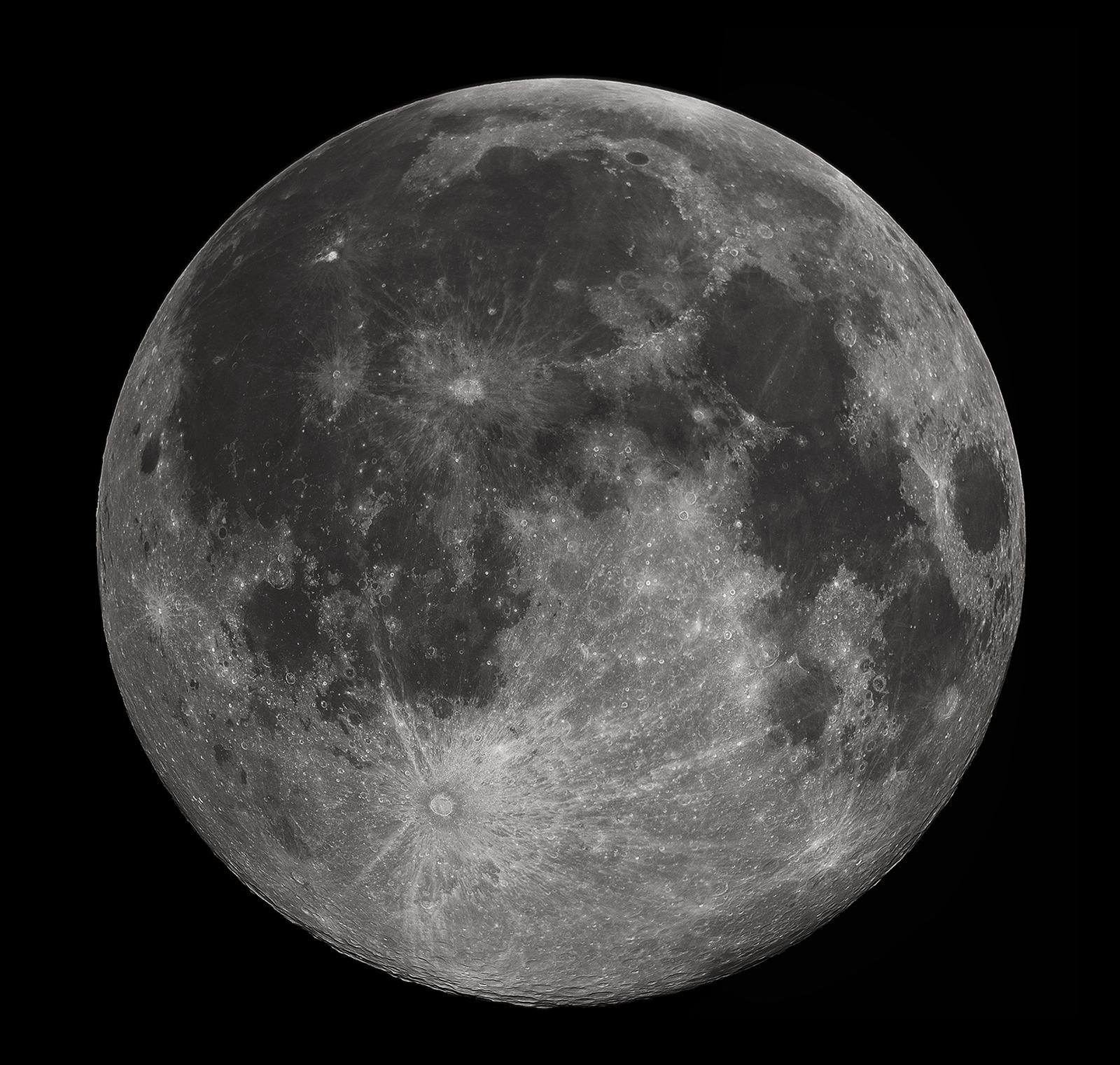
The full Moon: Gregory H. Revera, CC BY-SA 3.0
October 2026
Saturn reaches its best of the year, the Moon swings past Mars and Jupiter before dawn, and the Orionids peak.
Last quarter Moon confirmed
Exact at 13:25 UTC. The half-lit Moon rises around midnight and is high in the morning sky, so evenings stay dark for the next week.
Source: eclipse.gsfc.nasa.govSaturn at opposition confirmed
Earth passes between the Sun and Saturn. The ringed planet rises at sunset, stays up all night and is as close and bright as it gets this year. Any small telescope will show the rings.
Source: astropixels.comMoon meets Mars, then Jupiter confirmed
Before dawn on October 5 the waning Moon sits right beside Mars, and the next morning it moves next to bright Jupiter. From a few parts of the world the Moon actually passes in front of each planet for a while.
Source: astropixels.comNew Moon confirmed
Exact at 15:50 UTC. The nights around this date are the darkest of the month, the best time to look for the Milky Way from a dark site.
Source: eclipse.gsfc.nasa.govMercury at greatest evening elongation confirmed
Mercury reaches 25 degrees from the Sun in the evening sky. Look low in the west just after sunset. This appearance favours observers in the Southern Hemisphere, where the planet stands higher.
Source: astropixels.comFirst quarter Moon confirmed
Exact at 16:13 UTC. A great evening for craters: the shadows along the line between day and night on the Moon make the terrain pop in binoculars.
Source: eclipse.gsfc.nasa.govOrionid meteor shower peak confirmed
Best on the night of October 21 to 22. These meteors are dust from Halley's Comet. The American Meteor Society expects about 10 to 20 per hour at best, and a 74 percent lit Moon will wash out the fainter ones until it sets after midnight.
Source: amsmeteors.orgVenus passes between Earth and the Sun confirmed
Venus reaches inferior conjunction and vanishes from the evening sky. Within a couple of weeks it reappears before sunrise as the morning star.
Source: astropixels.comFull Moon (the Hunter's Moon) confirmed
Exact at 04:12 UTC. Because September's full Moon was the Harvest Moon, this one carries the traditional name Hunter's Moon. It rises around sunset and stays up all night.
Source: eclipse.gsfc.nasa.gov
All the dates on this list have passed. A fresh list is on the way.
November 2026
Venus returns at dawn, Mars and Jupiter meet, and three meteor showers peak, two of them under dark skies.
Last quarter Moon confirmed
Exact at 20:28 UTC. The next morning the Moon lines up close to Mars and Jupiter again in the pre-dawn sky.
Source: eclipse.gsfc.nasa.govSouthern Taurid meteors confirmed
Peak on the night of November 4 to 5. A slow, sparse shower known for the occasional bright fireball. A thin 25 percent crescent Moon makes for decent viewing.
Source: amsmeteors.orgVenus beside the crescent Moon confirmed
At dawn the slim crescent Moon sits about one degree from Venus, now back in the morning sky. From some places the Moon covers Venus for a short time.
Source: astropixels.comNew Moon confirmed
Exact at 07:02 UTC. Dark skies for the rest of the week, just in time for the Northern Taurids.
Source: eclipse.gsfc.nasa.govNorthern Taurid meteors confirmed
Peak on the night of November 11 to 12 with the Moon only 4 percent lit, which the American Meteor Society calls very favourable. Expect a slow trickle of meteors with the odd fireball.
Source: amsmeteors.orgMars and Jupiter side by side confirmed
Before dawn the red planet passes about 1.2 degrees from Jupiter, close enough to fit both in the same binocular view. Look east a couple of hours before sunrise.
Source: astropixels.comLeonid meteor shower peak confirmed
Best on the night of November 16 to 17. The crescent Moon (39 percent lit) sets in the evening, leaving the pre-dawn hours dark. Leonids are fast meteors that come from Comet Tempel-Tuttle.
Source: amsmeteors.orgMercury at greatest morning elongation confirmed
Mercury stands about 20 degrees from the Sun before sunrise. This morning appearance favours the Northern Hemisphere. Look low in the east-southeast about 45 minutes before dawn.
Source: astropixels.comFull Moon confirmed
Exact at 14:53 UTC. The Moon reaches its closest point in this orbit the next day, so this full Moon looks a little larger and brighter than average.
Source: eclipse.gsfc.nasa.govUranus at opposition confirmed
Uranus is up all night and at its best for the year. It sits right at the edge of naked-eye visibility, so use binoculars and a star chart app to pick out the faint blue-green dot.
Source: astropixels.com
All the dates on this list have passed. A fresh list is on the way.
December 2026
The year's best meteor shower under a dark sky, the solstice and the closest full Moon of 2026.
New Moon confirmed
Exact at 00:52 UTC. Dark evenings lead straight into the Geminids.
Source: eclipse.gsfc.nasa.govJupiter next to Regulus confirmed
Jupiter passes 1.3 degrees from Regulus, the brightest star in Leo. Jupiter is by far the brighter of the pair. Best seen late at night and before dawn.
Source: astropixels.comGeminid meteor shower peak confirmed
Best on the night of December 13 to 14. With only a 15 percent crescent Moon that sets early, conditions are good. Geminids are bright and slow, and unlike most showers they are active well before midnight.
Source: amsmeteors.orgDecember solstice confirmed
At 20:50 UTC the Sun reaches its southernmost point. It is the longest night of the year in the Northern Hemisphere and the longest day in the Southern Hemisphere.
Source: astropixels.comUrsid meteor shower peak confirmed
Best on the night of December 21 to 22. A small shower of about 5 to 10 meteors per hour, and an 89 percent lit Moon will interfere this year.
Source: amsmeteors.orgClosest full Moon of 2026 confirmed
Full at 01:28 UTC, then about seven hours later the Moon reaches its nearest point of the whole year, 356,650 km from Earth. Many people call this a supermoon.
Source: astropixels.comMoon near Jupiter confirmed
The waning gibbous Moon sits about 1.5 degrees from Jupiter late in the evening and through the night.
Source: astropixels.com
All the dates on this list have passed. A fresh list is on the way.
January 2027
A strong but short meteor shower, Venus at its widest in the morning sky and Earth at its closest to the Sun.
Venus at greatest morning elongation confirmed
Venus stands 47 degrees from the Sun, as far as it gets on this morning appearance. It blazes in the east before sunrise and is impossible to miss.
Source: astropixels.comEarth at perihelion confirmed
Earth makes its closest approach to the Sun for the year, about 0.983 times its average distance. Seasons come from Earth's tilt, not this distance, which is why it is winter up north.
Source: astropixels.comQuadrantid meteor shower peak confirmed
Best on the night of January 3 to 4. The peak is sharp and only lasts a few hours. The American Meteor Society puts the average rate under dark skies at about 25 per hour, and an 18 percent crescent Moon will not get in the way much.
Source: amsmeteors.orgFull Moon confirmed
Exact at 12:17 UTC, less than a day after the Moon's closest point in its orbit.
Source: eclipse.gsfc.nasa.govMoon near Jupiter confirmed
Two nights after full, the Moon passes about 1.5 degrees from Jupiter, which is heading for its own opposition in February.
Source: astropixels.com
All the dates on this list have passed. A fresh list is on the way.
How to get a good view
Get away from lights. Even a park on the edge of town beats a backyard under a streetlight. Face away from the glow of the nearest city and give yourself as much open sky as you can.
Let your eyes adjust. The American Meteor Society suggests giving your eyes at least 20 to 30 minutes in the dark. One glance at a bright phone screen resets the clock, so turn the brightness right down or use a dim red light.
You do not need an app or a telescope. The Moon, the bright planets and meteor showers are all naked-eye sights. Meteors are actually best without optics, because binoculars shrink the patch of sky you are watching. Binoculars are great for the Moon's craters, Jupiter's moons and faint Uranus.
For meteors, lie back and look about halfway up the sky, not straight at the radiant. Most showers are best between midnight and dawn. Dress warmer than you think you need: you will be sitting still for a long time.
All times are UTC. Weather, your latitude and your local horizon decide what you can actually see, so use these dates as a starting point and check a local forecast.
- NASA GSFC: Phases of the Moon 2001 to 2100 (Fred Espenak)
- AstroPixels: Sky Event Almanac 2026 (GMT)
- AstroPixels: Sky Event Almanac 2027 (GMT)
- American Meteor Society: Meteor Shower Calendar 2026-2027
- American Meteor Society: Meteor FAQ
- NASA: What's Up, September 2026 Skywatching Tips
Facts on this page were checked against these sources (updated Oct 1, 2026). Spot an error? Email hello@fireempireshop.com.