The Moon
Earth's faithful, slowly drifting companion. The Moon steadies Earth's tilt, drives our tides and is drifting away about 3.8 cm every year. Explore its origin, phases and missions.
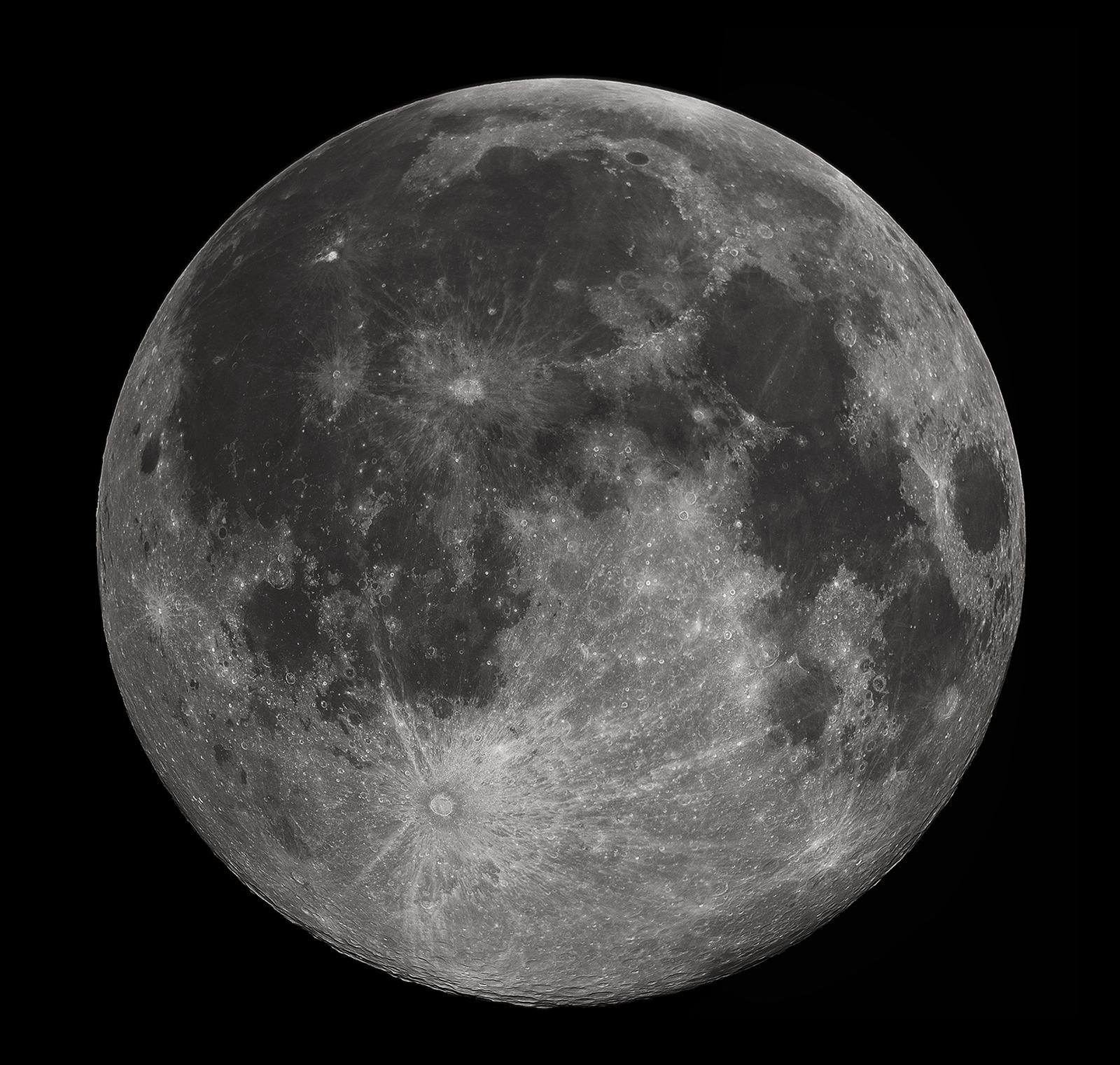
The full Moon: Gregory H. Revera, CC BY-SA 3.0
Born in a giant collision
The leading idea for the Moon's origin is dramatic. About 4.5 billion years ago, when Earth was still young, a body roughly the size of Mars slammed into it. The impact blasted molten rock into orbit, and that debris quickly gathered into the Moon.
Rocks brought home by the Apollo astronauts support this story. They are chemically very similar to Earth's mantle but poor in water and other easily vaporized materials, just what you would expect from material flung out in an intensely hot collision.
The Moon is the fifth largest moon in the solar system and unusually large compared with the planet it orbits. Its dark patches, called maria or seas, are actually ancient plains of hardened lava that flooded giant impact basins billions of years ago. The brighter highlands are older, heavily cratered crust.
Video: 10 Years at the Moon. Credit: NASA's Goddard Space Flight Center (source). NASA media; no endorsement implied.
The Moon is slowly running away from Earth
The Moon recedes about 3.8 cm per year, measured by bouncing lasers off retroreflectors left by Apollo astronauts. Tidal interaction pushes the Moon outward and slowly lengthens Earth's day.
YouTube @Planetinio (launching soon). Photos in this Short: Apollo 11 Lunar Laser Ranging Experiment.jpg - NASA (Public domain) via Wikimedia Commons | Laser Ranging Retro-Reflector, Apollo (NASM2020-00367).jpg - Smithsonian National Air and Space Museum/Mark Avino (CC0) via Wikimedia Commons | Lunar Laser Ranging at the Observatoire de la Côte d'Azur DSC 0729 (10782460465).jpg - Melirius (CC BY-SA 2.0) via Wikimedia Commons | ALSEP AS14-67-9386 (cropped).jpg - NASA (Public domain) via Wikimedia Commons | Laser Ranging Retro-Reflector, Apollo (NASM2020-0
Why we always see the same face
The Moon spins once on its axis in exactly the time it takes to orbit Earth, about 27.3 days. Over billions of years, Earth's gravity locked it into this rhythm, so the same side always faces us. The far side is not dark, it simply points away from Earth and was a mystery until a Soviet probe photographed it in 1959.
Its familiar phases come from the changing angle between the Sun, Earth and Moon. The full cycle from new Moon to new Moon takes about 29.5 days, which is where the idea of a month comes from.
Slowly saying goodbye
Here is a surprising fact: the Moon is moving away from us. Its gravity raises tides in Earth's oceans, and because Earth spins faster than the Moon orbits, those tidal bulges run slightly ahead and give the Moon a tiny forward tug. That pull raises its orbit by about 3.8 centimeters every year, measured precisely by bouncing lasers off mirrors the Apollo crews left on the surface.
The same tidal friction is slowly lengthening Earth's day. Hundreds of millions of years ago, a day on Earth was noticeably shorter than 24 hours. The Moon also steadies the tilt of Earth's axis, which helps keep our seasons fairly stable.
Footprints, robots and a return
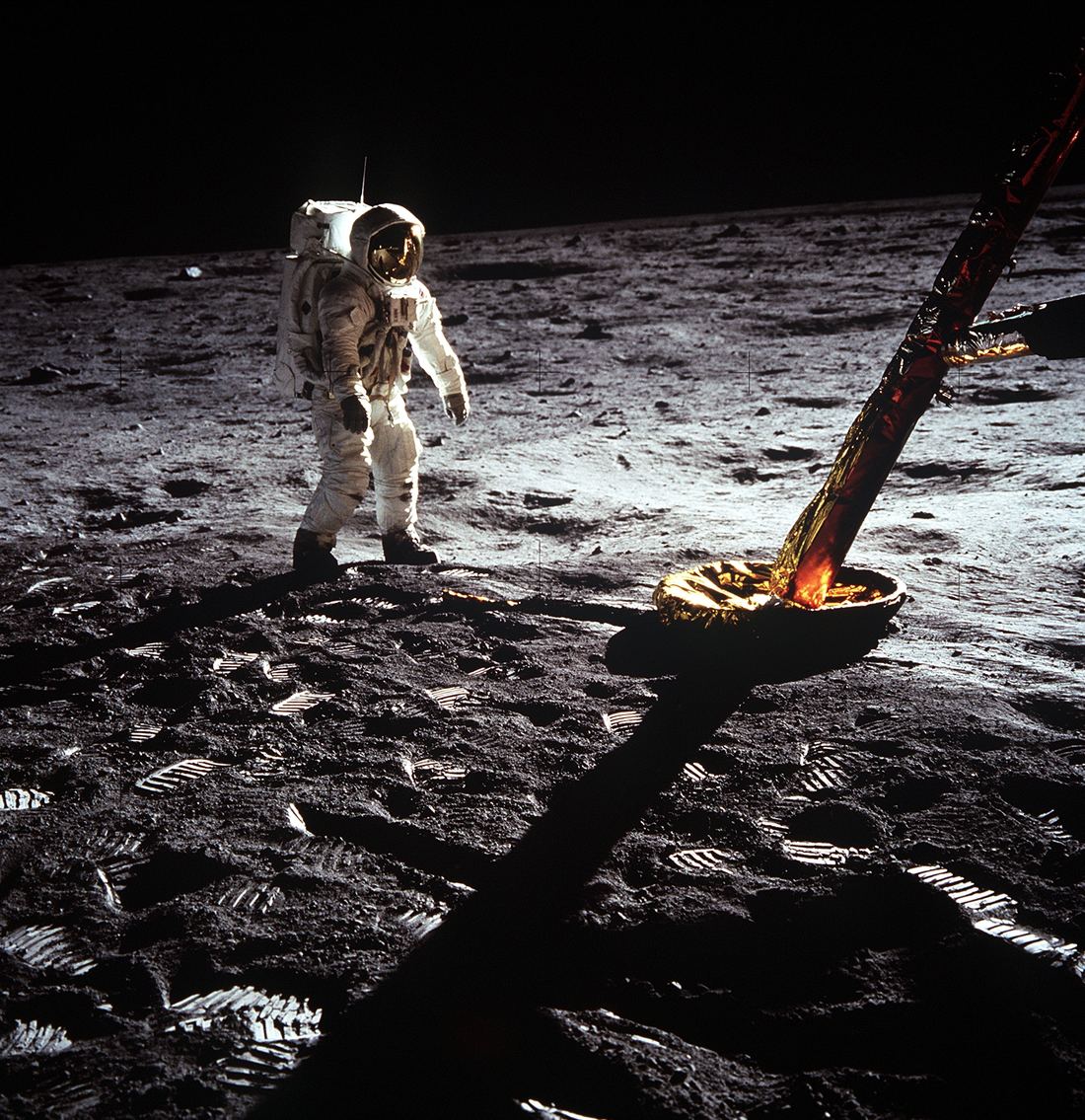
Between 1969 and 1972, twelve astronauts walked on the Moon during six Apollo landings, collecting about 382 kilograms of rock and soil. With no wind or rain, their footprints are still there. NASA's Lunar Reconnaissance Orbiter, circling the Moon since 2009, has photographed the landing sites from orbit.
Orbiters have also found evidence of water ice in permanently shadowed craters near the poles, a resource future explorers could use. In April 2026, the four-person Artemis II crew flew around the Moon, the first humans to travel there in more than 50 years.

Facts on this page were checked against these sources.
- The full Moon: Gregory H. Revera, CC BY-SA 3.0
- Buzz Aldrin on the Moon during Apollo 11, 1969: NASA, Public domain
- Full Moon over Washington, D.C.: NASA/Bill Ingalls, Public domain
- Video: 10 Years at the Moon, NASA's Goddard Space Flight Center, NASA (public domain)
- Short photos: Apollo 11 Lunar Laser Ranging Experiment.jpg - NASA (Public domain) via Wikimedia Commons | Laser Ranging Retro-Reflector, Apollo (NASM2020-00367).jpg - Smithsonian National Air and Space Museum/Mark Avino (CC0) via Wikimedia Commons | Lunar Laser Ranging at the Observatoire de la Côte d'Azur DSC 0729 (10782460465).jpg - Melirius (CC BY-SA 2.0) via Wikimedia Commons | ALSEP AS14-67-9386 (cropped).jpg - NASA (Public domain) via Wikimedia Commons | Laser Ranging Retro-Reflector, Apollo (NASM2020-00364).jpg - Smithsonian National Air and Space Museum/Mark Avino (CC0) via Wikimedia Commons | Full Moon Luc Viatour.jpg - Luc Viatour (CC BY-SA 3.0) via Wikimedia Commons | FullMoon2010.jpg - Gregory H. Revera (CC BY-SA 3.0) via Wikimedia Commons | Full moon partially obscured by atmosphere.jpg - NASA (Public domain) via Wikimedia Commons
Text written by Planetinio.